Tan Dong Communal House, Go Cong

Tan Dong Communal House: Architecture Held in Nature's Embrace

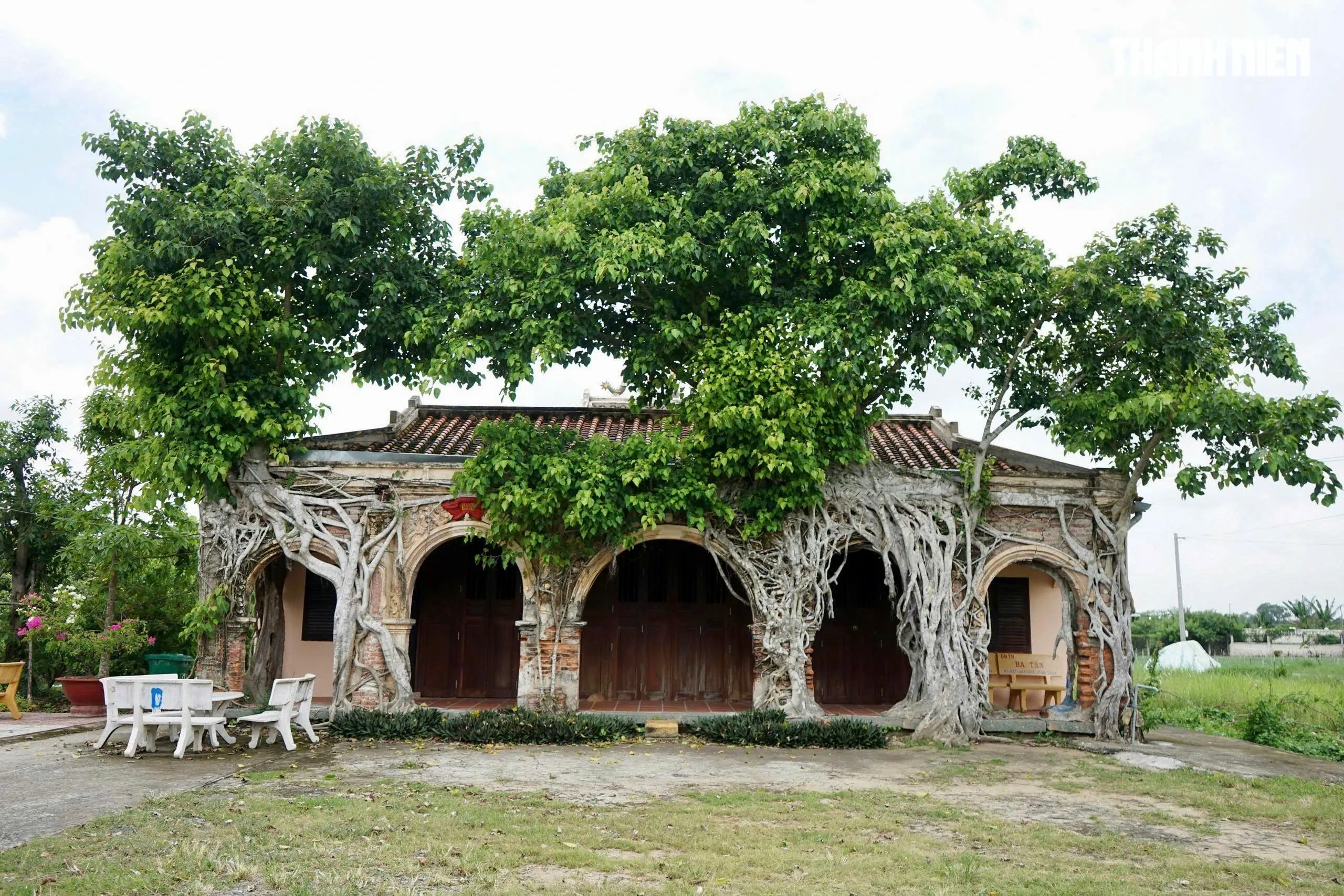
Often called “the miniature Angkor Wat of Southern Vietnam,” Tan Dong Communal House has an almost surreal beauty: its entire facade is supported and enveloped by the immense roots of three ancient bodhi trees.

View Rooms Back to the Go Cong Guide
A Market Shaped by Time

The Century-Old Origins of Tan Dong Communal House

Tan Dong Communal House, also known locally as Go Tao Communal House, dates from the early twentieth century and was established to worship the village guardian deity, believed to protect local people and their harvests. In its prosperous years, it hosted major Ky Yen peace festivals that drew residents from across the surrounding area for worship and community gatherings.

War and historical upheaval eventually forced local residents to leave. With no one tending incense or ceremonies, the communal house slipped into neglect and stood abandoned amid open fields. Yet that very abandonment created the conditions for an extraordinary act of nature to unfold over the following decades.

Period Built in the early twentieth century and closely tied to the history of settlement in Southern Vietnam.
Worship Dedicated to the village guardian deity, a spiritual symbol of protection for the community.
Upheaval Abandoned during wartime, allowing nature to transform the structure in a remarkable way.
Tan Dong Communal House in the History of the Tan Dong Area
Before becoming an architectural wonder, Tan Dong Communal House was once the thriving spiritual center of the old Go Tao community.
Nature's Extraordinary Work

The Remarkable Symbiosis of Roots and Architecture

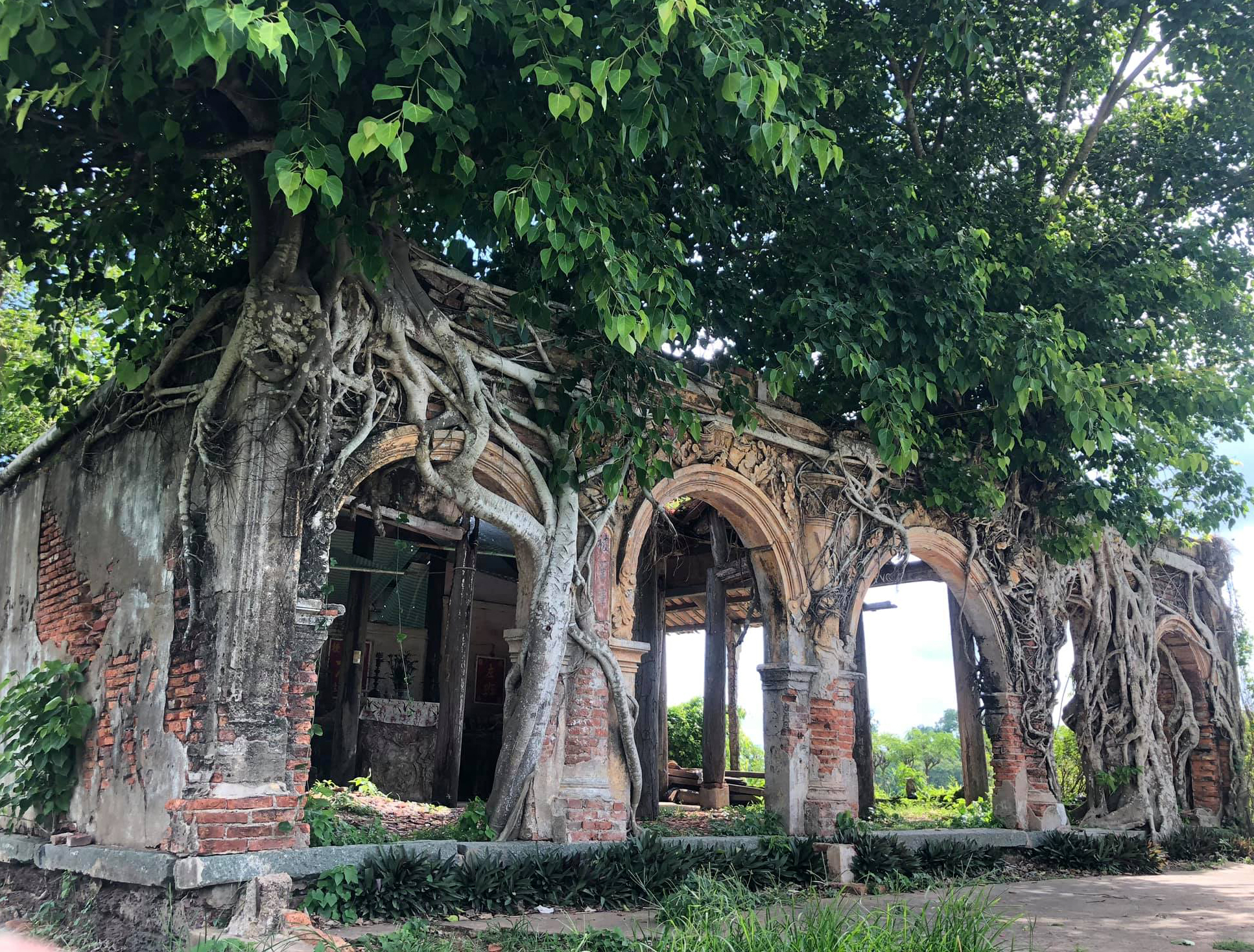
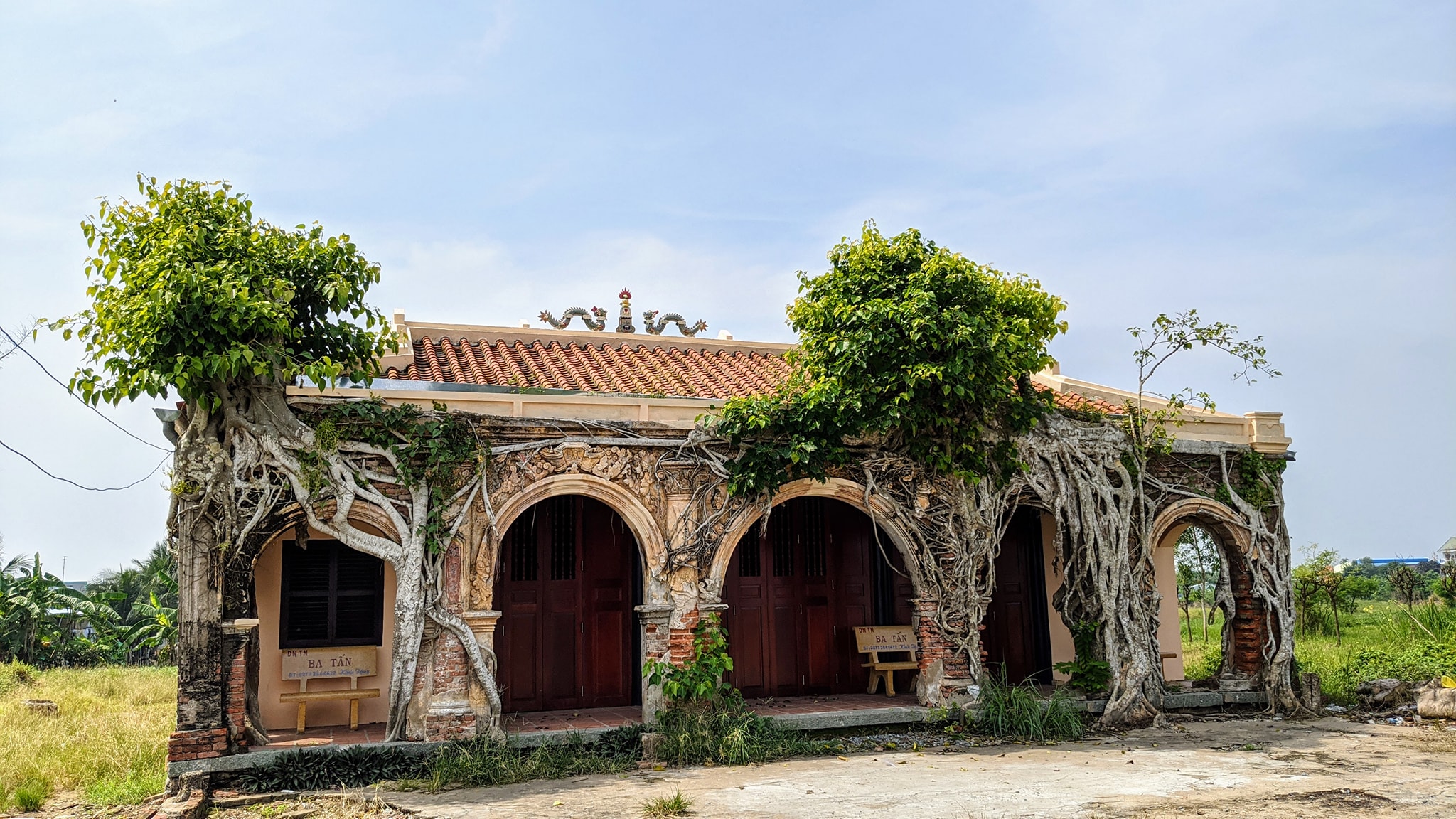
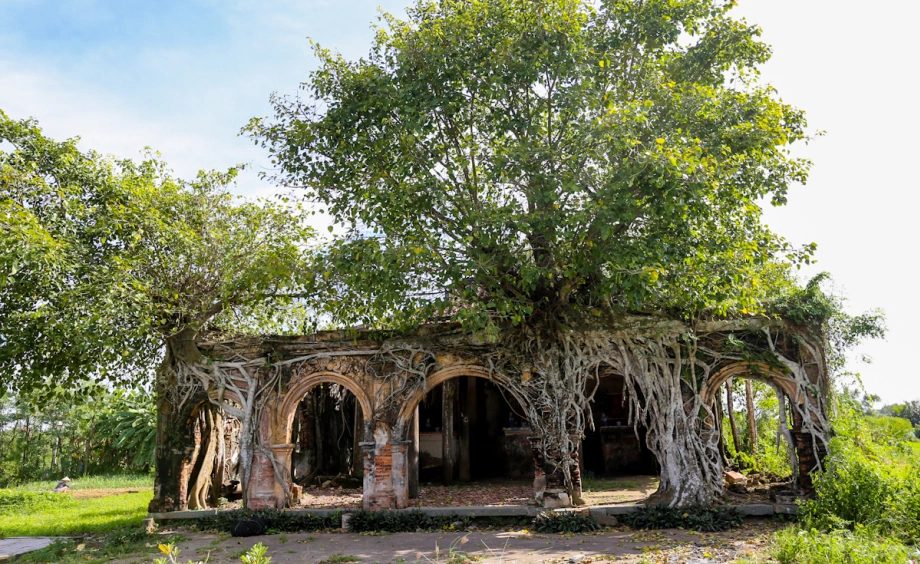
What makes Tan Dong Communal House famous today is the presence of three ancient bodhi trees, sometimes locally called banyan trees. Seeds landed on the roof decades ago, germinated and sent their roots downward. Over time, hundreds of roots, large and small, extended and intertwined until they wrapped around the walls, pillars and main gate.

It is often described as a spectacular form of symbiosis. The cracked, aging walls gave the trees a structure to cling to as they grew; in return, the dense network of roots formed an enormous natural framework that helped keep the communal house from collapsing under the Mekong Delta's rain and sun.

The sight of thick roots swallowing moss-covered brickwork is overwhelming and immediately recalls Ta Prohm, the legendary tree-covered temple in Cambodia's Angkor complex.

Tree Roots and Architecture at Tan Dong Communal House
The tangled bodhi roots are both an invading force and a protective shell that has helped prevent the building from collapsing.
A Striking Visual Experience

A Surreal Beauty Unlike Anywhere Else

Go Cong's old houses, such as Nha Doc Phu Hai, reveal the refinement and wealth created by people. Tan Dong Communal House, by contrast, shows the raw power of nature. The atmosphere shifts the moment you pass through the gate: silence, deep shade beneath the immense canopy and a faint trace of incense create a mood that is both contemplative and sacred.

Peeling plaster, exposed red brick, silver-gray roots and green leaves form a naturally perfect vintage palette—no photo filter required.

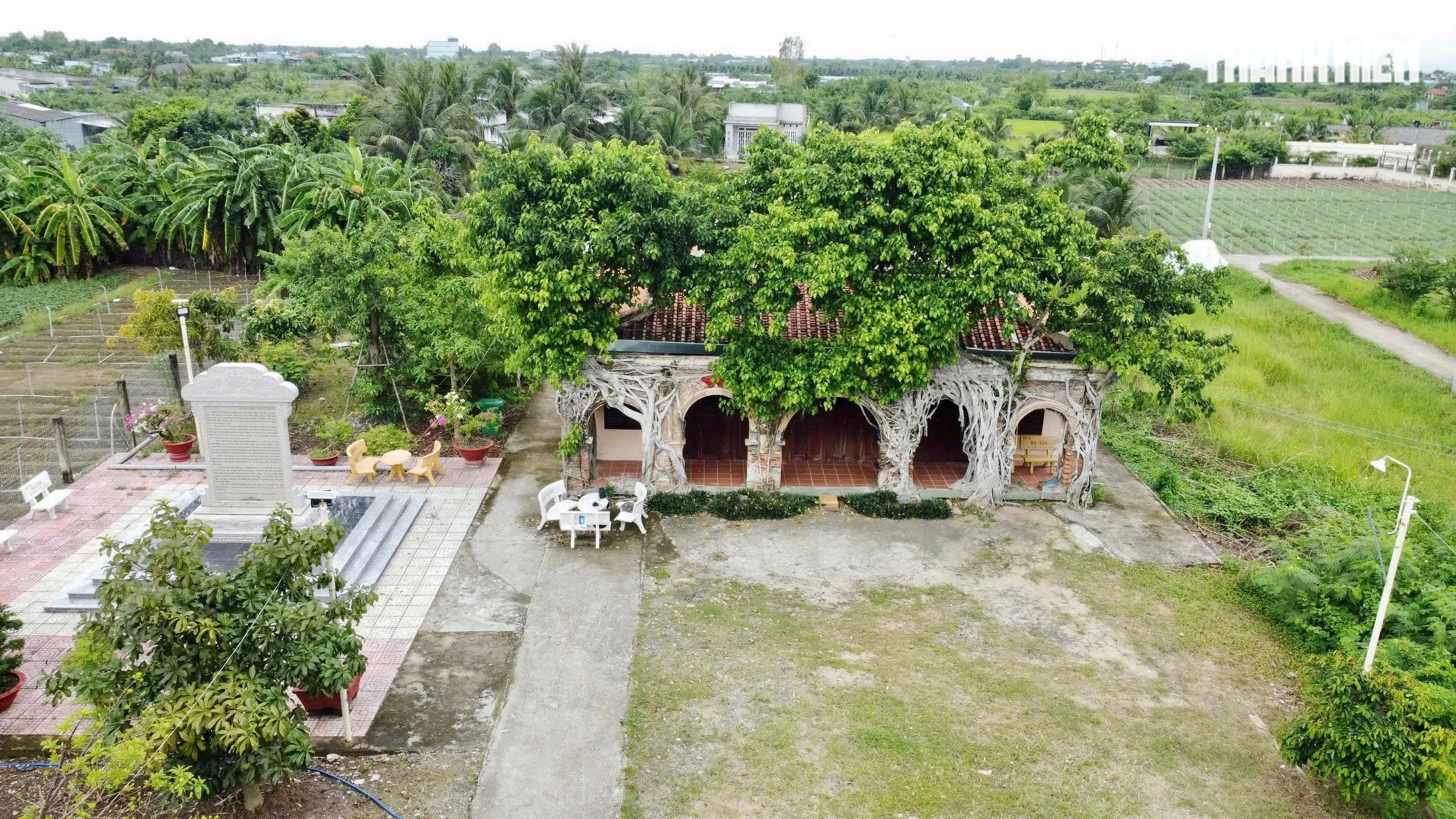
The site once appeared so dark and overgrown that some people called it the “ghost communal house.” Today, however, the grounds have been cleared and carefully maintained, making the visit peaceful, open and safe.

Highlight Roots completely surround the main gate and facade, creating mysterious organic forms.
Atmosphere Quiet, deeply shaded, cinematic and nostalgic.
Today The grounds are now clean and well maintained, with none of the former sense of abandonment.
Tan Dong Communal House, Go Cong
The surreal beauty of Tan Dong Communal House is a vivid testament to the resilience of nature.
Restoration and Revival

A Sacred Space Reborn After Restoration

Around 2020–2021, Tan Dong Communal House underwent a major restoration. Rather than cutting down the trees, the authorities and conservation team chose to preserve the entire root system surrounding the walls.

Within that living shell, the building's inner structure, tiled roof and altar were reinforced and carefully restored. The communal house has now regained its religious life. Its caretakers clean the site daily, and incense and lamps once again bring warmth to the interior.

A visit is therefore not simply a look at the remains of an abandoned building. You are entering a living cultural space where conservation respects both human history and natural history.

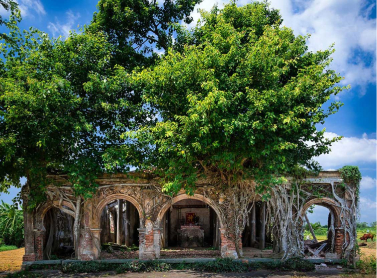
Tan Dong Communal House Before Restoration
The Interior and Grounds Before Restoration
Through a Photographer's Lens

A Standout Setting for Fine-Art and Nostalgic Photography

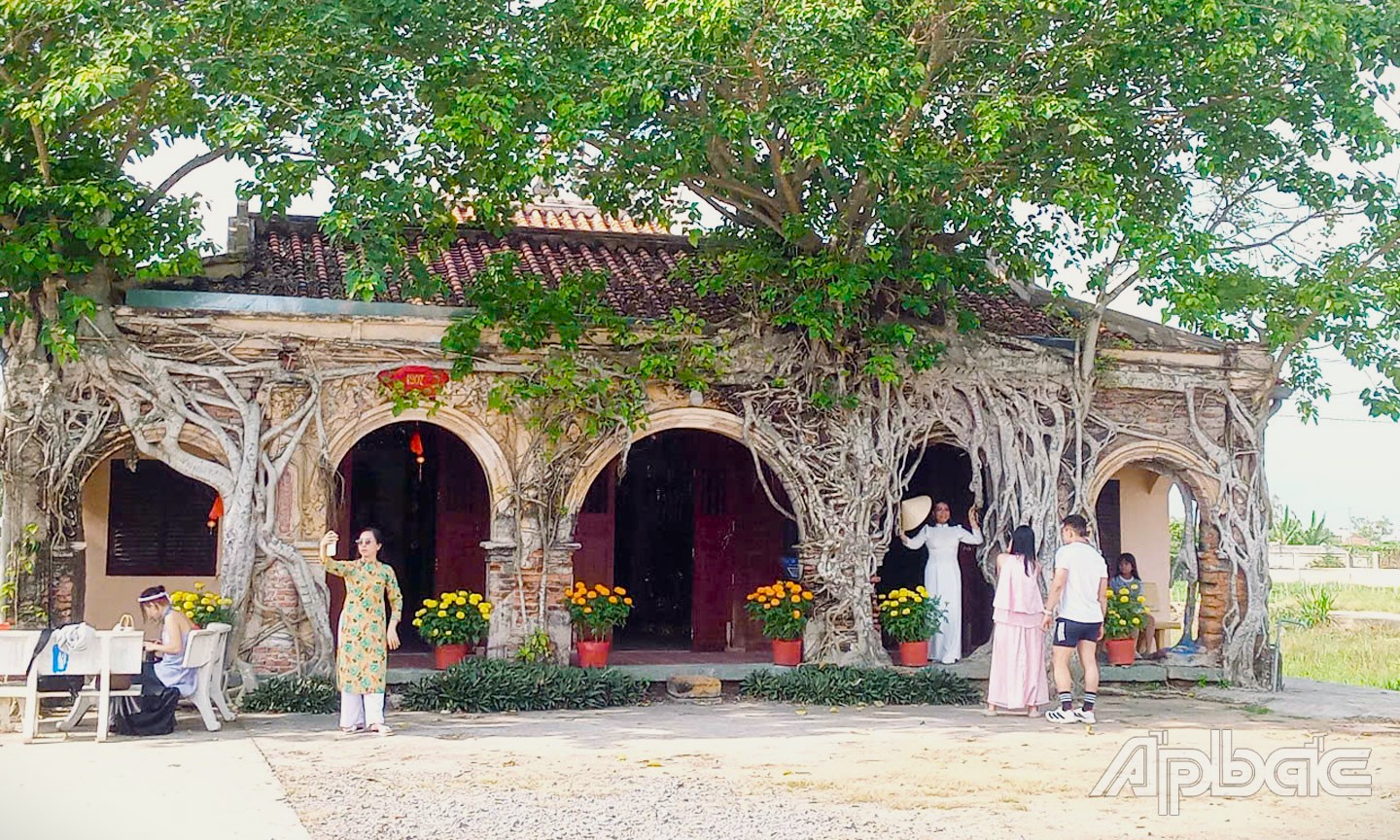
Tan Dong Communal House is a true destination for photographers. The ancient roots create a dramatic backdrop well suited to folk-inspired and nostalgic concepts. Traditional ao tac, Vietnamese ceremonial dress, ao dai or simple outfits in muted shades such as brown, beige and burgundy stand out beautifully against the setting.

Suggested composition: The most striking angle is directly in front of the arched gate crossed by roots. In the early morning from 7:00 to 8:00 a.m., or late afternoon from 3:00 to 4:00 p.m., slanting light filters through the leaves and creates haunting, artistic shadows.

Please remember that this remains a place of worship. Do not climb on the roots, sit on altar platforms or pose in ways that are disrespectful to the sacred setting.

Photography at Tan Dong Communal House
An ao dai or traditional Vietnamese outfit is an ideal choice for photographs here.
Getting There

How to Fit the Visit Into Your Itinerary

Tan Dong Communal House lies in Tan Dong Commune, a short motorbike ride from central Go Cong. The approach follows quiet, tree-lined country roads, making it better suited to a relaxed countryside outing than a tightly packed tour of the busy town center.

Ideal route: From Go Cong Hideaway, borrow a bicycle or take a motorbike in the cooler afternoon. Ride through the village roads, spend about 45 minutes at the communal house, then continue toward Tan Thanh Beach for sea air and seafood at dusk.

The timeworn beauty of the communal house and the openness of the coast make a memorable combination for an afternoon in Go Cong.

Country Roads Around Go Cong
Tan Dong Communal House sits along a peaceful rural route that is ideal for a leisurely bicycle or motorbike ride.
Thoughtful preparation

Helpful Tips for Your Visit

The site is surrounded by dense greenery, so bring mosquito and insect repellent, especially during humid weather or after rain.

Keep your voice at a respectful level inside the grounds. A friendly greeting to the caretakers as they sweep or tend the site may lead to fascinating stories about the communal house that cannot be found in guidebooks.

There is no admission fee. Guests may light incense or, if they wish, make a small donation toward lamps, incense and the continuing preservation of the site.

Tan Dong Communal House, Go Cong
Courtesy and respect for the sacred setting will make your visit far more meaningful.
Read Next

Plan Your Go Cong Trip Your Way

Many more heritage sites and local experiences await across Go Cong. Explore the guides below to organize an easy and enjoyable trip from Go Cong Hideaway.

Stay at Go Cong Hideaway for a More Relaxed Go Cong Trip

With its convenient location, Go Cong Hideaway is an ideal base for visiting Tan Dong Communal House, the Royal Mausoleum, Go Cong's old houses and Tan Thanh Beach. Return after your explorations to a quiet, restorative place to rest.

View Room Types Contact Us to Book

Sources

The historical and architectural information in this article was compiled from local heritage-conservation materials and firsthand stories to add depth to the visitor experience.

Frequently Asked Questions

Is there an admission fee for Tan Dong Communal House?

No. It is a public cultural and spiritual site, so admission is free. Visitors are welcome to worship and take photographs.

Is the communal house abandoned or frightening, as some stories suggest?

No. Since 2020, the site has been restored and reinforced, with caretakers cleaning it every day. The grounds are now open, tidy and safe.

What should I wear for photographs here?

Because this is both a place of worship and a strongly nostalgic setting, choose respectful clothing. Ao dai, ao tac, traditional Vietnamese dress or simple outfits in muted tones such as brown, white and beige photograph especially well.

What other places pair well with Tan Dong Communal House?

Because it lies just outside the town center, combine it with a bicycle or motorbike ride through the countryside, then continue to Tan Thanh Beach for sunset and seafood.

Is there anything important to keep in mind?

The large trees and deep shade occasionally attract mosquitoes, so bring insect repellent. Never climb on the roots, as they are part of the protected heritage site.