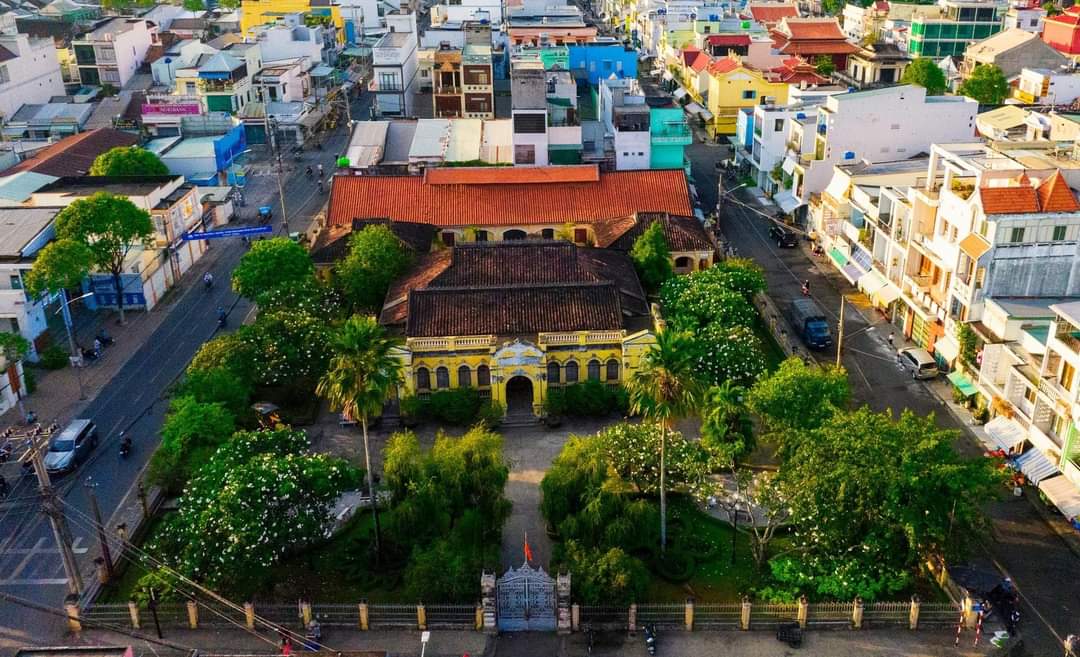
Nha Doc Phu Hai, Go Cong

Nha Doc Phu Hai: An East–West Masterpiece of Go Cong's Landowning Elite

Beyond its French-style iron gate lies a magnificent world of carved timber. Step inside the refined lifestyle of Southern Vietnam's elite more than a century ago.

View Rooms Back to the Go Cong Guide
Go Cong's Golden Age

Go Cong: A Meeting Place of Wealth and Refinement

In the late nineteenth and early twentieth centuries, Go Cong was regarded as one of the most prosperous areas of Cochinchina. Its favorable location and expansive rice fields produced an extremely wealthy class of landowners and officials. Their fortunes were expressed not only through accumulated wealth, but through competition to build increasingly impressive residences.

Nha Doc Phu Hai emerged during this golden age. Unlike purely traditional timber houses, the wealthy families of Go Cong were beginning to embrace French culture. They imported European materials and hired French engineers for the facade, while still bringing the finest carpenters from Central and Northern Vietnam to carve the interior timberwork.

The house is therefore more than a building. It marks a major transformation in modern Vietnamese society: the meeting and blending of Eastern and Western culture.
Historical Setting Go Cong's golden age, shaped by the wealth of Cochinchina's landowning elite.
Aesthetic A deep cultural exchange between local tradition and French design.
Significance One of the largest, best-preserved and most beautiful historic houses in the Mekong Delta.
Old Go Cong and the Social Setting of Nha Doc Phu Hai
Go Cong's old houses bear witness to the aristocratic lifestyle of wealthy Southern landowners in the early twentieth century.
A Family Story

Three Generations Behind the Story of Nha Doc Phu Hai

Many visitors assume Doc Phu Hai built the house himself, but its history is more complex. It was first built in 1860 by Tran Thi Sanh, the second wife of national hero Truong Dinh. When she later entered a Buddhist temple, she passed the house to her daughter Duong Thi Huong, born to an earlier husband.

After passing through the family, the house came to her granddaughter Huynh Thi Dieu. She married Nguyen Van Hai, who held the senior colonial-era title of doc phu su. Between 1895 and 1900, he oversaw a major renovation and expansion, adding the grand Western exterior seen today.

The name Nha Doc Phu Hai became permanently associated with the residence, representing one of Go Cong's most prominent families and its exceptionally privileged lifestyle.

Nha Doc Phu Hai and the Story of Its Owners
Across three generations, a traditional timber house was transformed into an imposing hybrid mansion.
A Museum of Decorative Art

Priceless Woodcarving and Mother-of-Pearl Antiques

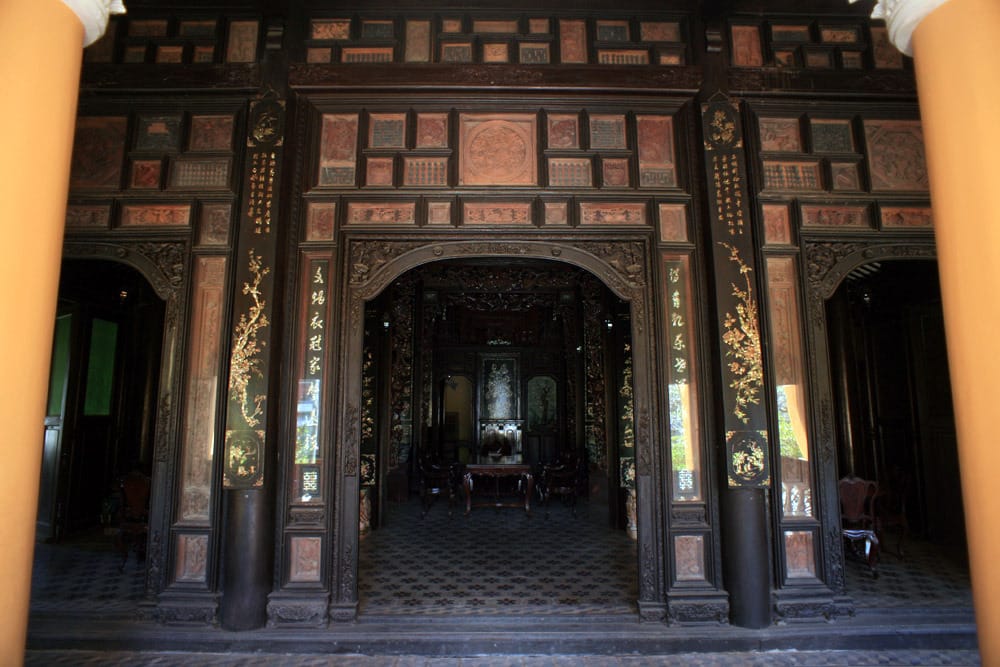
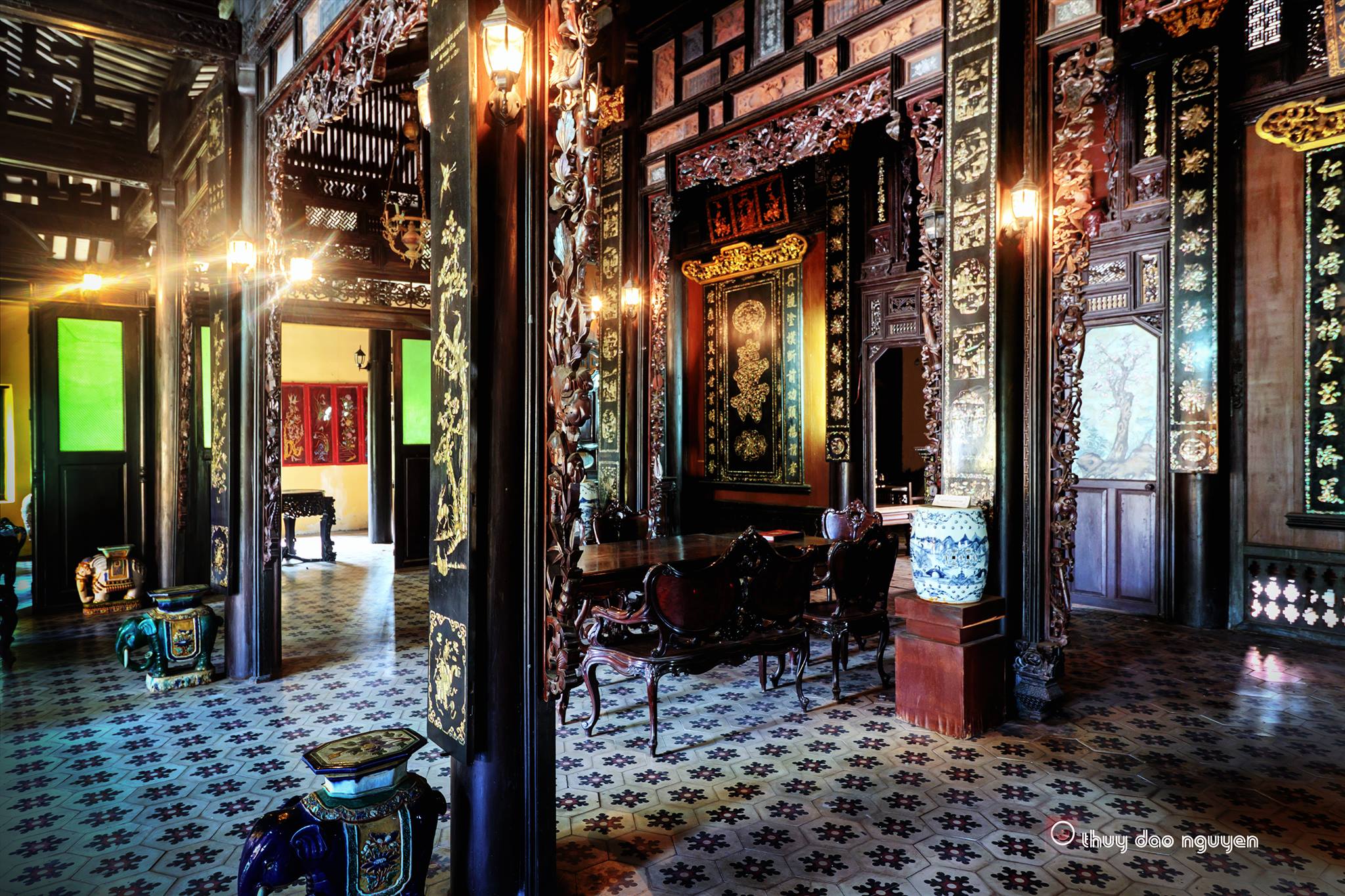
Inside, the opulence is immediate. Nha Doc Phu Hai contains more than 350 finely carved timber panels across plaques, parallel sentences, frames and archways. Craftsmen used openwork, relief and incised carving to depict the four sacred creatures—dragon, qilin, tortoise and phoenix—and the four noble plants—pine, chrysanthemum, bamboo and apricot blossom—with remarkable vitality.

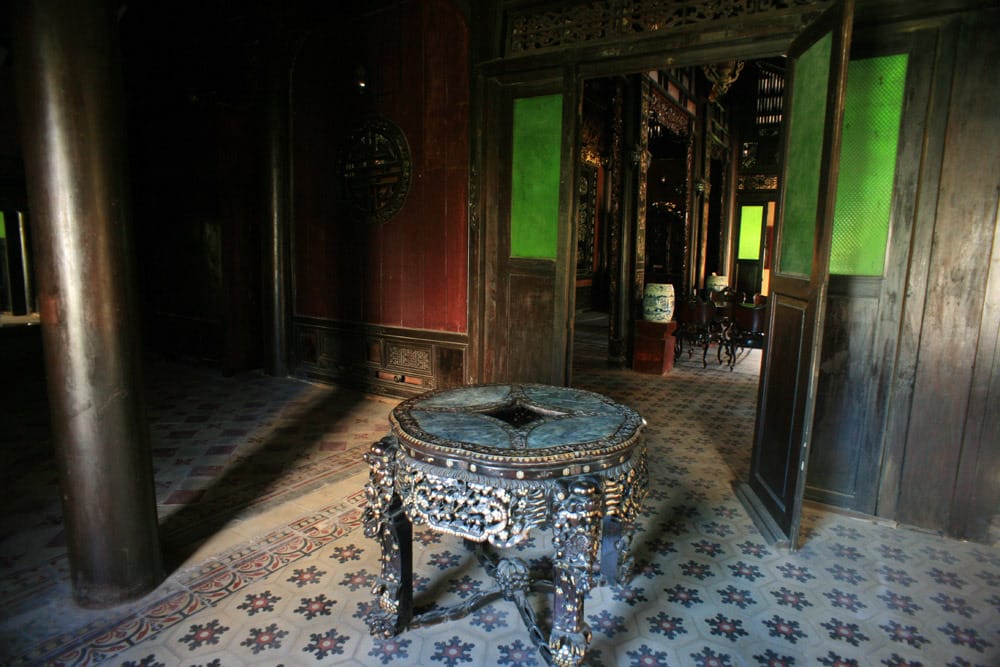
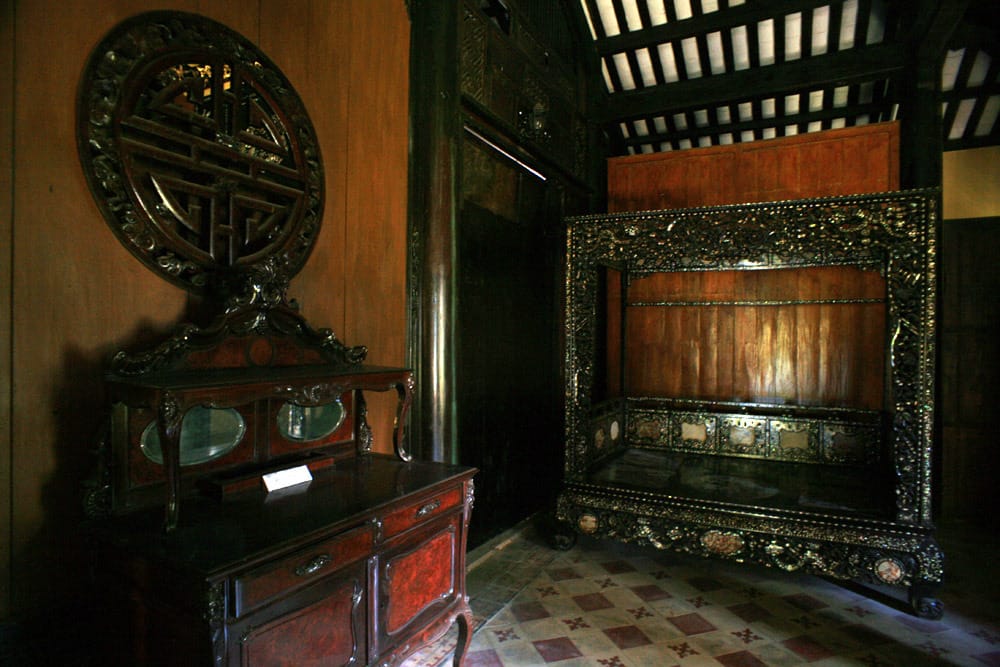
The furnishings form a treasure collection of their own. Highlights include seven-treasure beds, traditionally described as inlaid with seven precious materials and topped with cool marble; shimmering mother-of-pearl altar cabinets; and elaborate tables and chairs imported from France or crafted by hand over many years.

Run your hand lightly across the polished table surface or study the sharp mother-of-pearl details in light from the windows, and the former owners' refined taste and willingness to spend become unmistakable.

Woodcarving More than 350 intricate carved timber panels, with no two details exactly alike.
Precious Furnishings Marble-topped seven-treasure beds and mother-of-pearl altar cabinets that glow in the light.
Luxury Many objects were imported intact from France by water.
The Seven-Treasure Bed with Floral Relief and Mother-of-Pearl Inlay
Western Outside, Eastern Within

The Distinctive “Western Outside, Eastern Within” Style

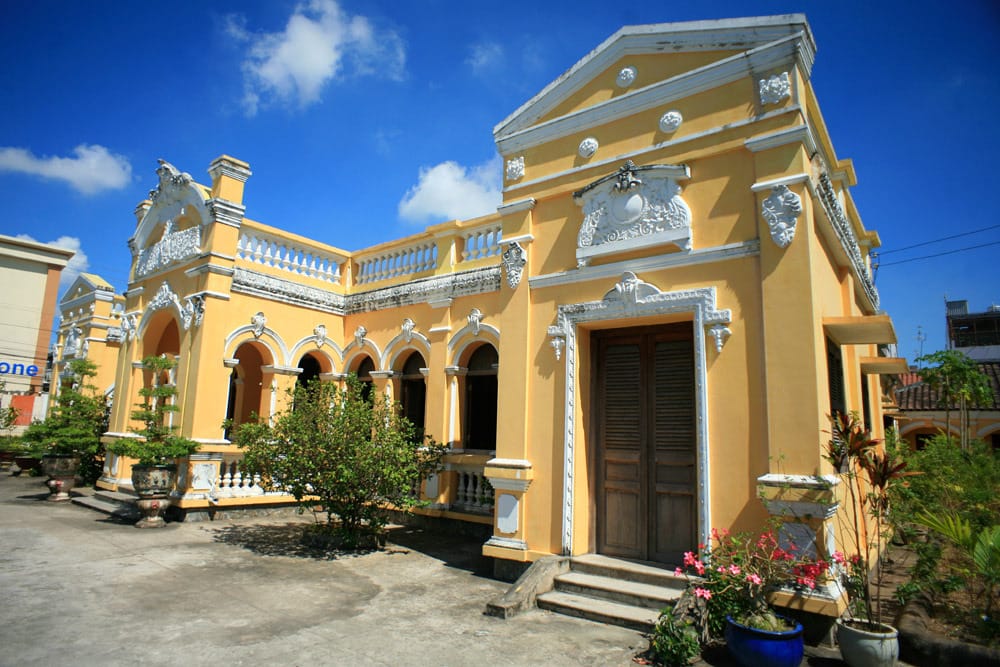
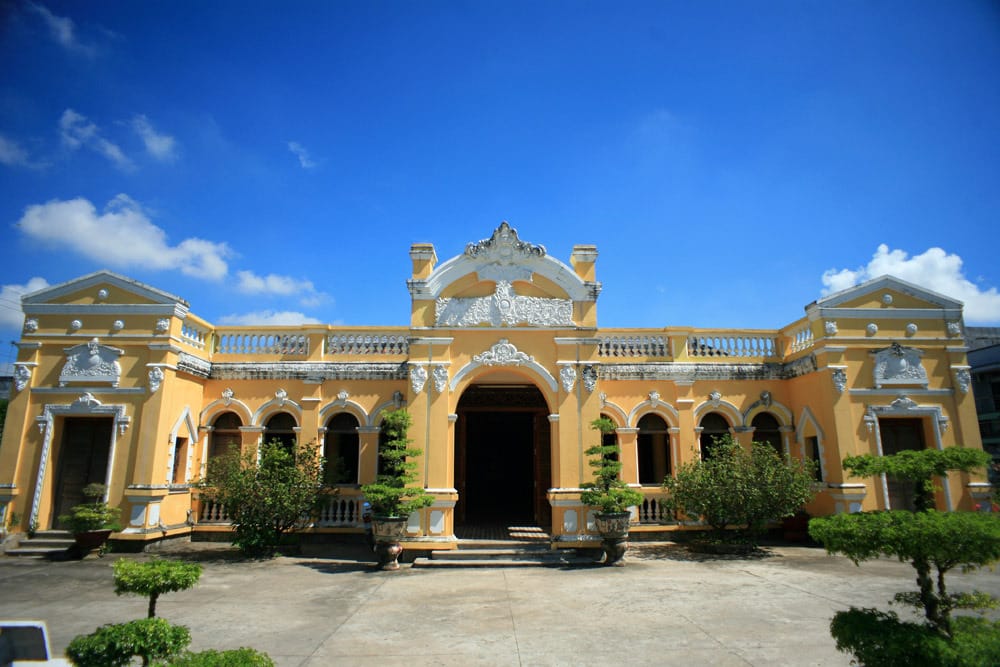
Architecturally, Nha Doc Phu Hai is a classic example of “Western outside, Eastern within.” From the street, it resembles a French villa with ornate cast-iron fencing, imposing Roman columns, arched forms and tropical louvered shutters.

Cross the threshold, however, and an entirely different world appears. The interior follows the traditional Vietnamese three-bay, two-wing timber-house structure, with yin-yang roof tiles and imported French patterned floor tiles, while the ancestral-worship layout observes Eastern principles of geomancy.

The contrast is not forced; the two traditions complement one another. The Western envelope provides strength and ventilation, while the Eastern core preserves warmth, dignity and the household's spiritual order.

The Interior of Nha Doc Phu Hai
The facade resembles a French villa, while the interior remains a traditional Vietnamese three-bay timber house.
Southern Vietnamese Cinema

A Familiar Location in Southern Vietnamese Film

Even before visiting Go Cong, you may already have seen Nha Doc Phu Hai on screen. Its remarkably intact historic setting has made it one of the most sought-after locations for films and television dramas set in old Southern Vietnam.

Popular series such as “Ngon Nen Hoang Cung,” “Khuc Tuong Tu” and “Duyen No Mien Tay”, along with folk-inspired music videos, have been filmed here. Every veranda, wooden platform bed and long corridor carries rich cinematic potential.

Walking slowly through the corridor and hearing your footsteps on the old patterned tiles, it is easy to imagine yourself as a young heir or daughter in a Southern Vietnamese drama set a century ago.

Nha Doc Phu Hai—a Familiar Filming Location in Southern Vietnamese Cinema
The building's exceptional state of preservation makes it a perfect setting for television dramas about old Southern Vietnam.
Photography Tips

The Best Time to Visit and Take Photographs

Historic houses are often kept dim to protect their timber interiors. The best time to visit is therefore between 8:00 and 10:00 a.m., when soft sunlight passes through the louvered shutters and illuminates the mother-of-pearl plaques.

Clothing suggestion: For authentic nostalgic photographs, wear an ao dai, ao ba ba or vintage-inspired clothing in neutral colors such as brown, beige or white. Avoid revealing outfits, as the house is a historic site with a solemn ancestral altar.

Move slowly, avoid flash when photographing mother-of-pearl details and never sit on the seven-treasure beds or antique chairs.

Rare Furnishings at Nha Doc Phu Hai
Nha Doc Phu Hai preserves many rare objects, including mother-of-pearl cabinets and chairs, marble tables, and Chinese and Vietnamese ceramics from the seventeenth and eighteenth centuries.
Suggested Itinerary

Suggested route from Go Cong Hideaway

Its central location makes it easy to plan an engaging historical walk from Go Cong Hideaway.

A connected three-stop route: Begin at Nha Doc Phu Hai at 8:30 a.m. for a glimpse of elite life. At 9:30 a.m., walk a few hundred meters to the Truong Dinh Mausoleum and pay your respects to the national hero. At 10:30 a.m., continue to Ao Truong Dua for a cool breeze before stopping at a local eatery for bun suong or famous Go Cong hu tieu.

These three places reveal three sides of the old town: the wealth of landowners, the honor of a national hero and the leisure culture of a prosperous urban center. Together, they offer a deep and complete introduction to Go Cong.

Nha Doc Phu Hai
Nha Doc Phu Hai—a Classic Example of “Western Outside, Eastern Within.”
Read Next

Plan Your Gò Công Trip Your Way

Many more surprises await across Go Cong. Explore the suggestions below to add variety to your trip.

Stay at Go Cong Hideaway and Enjoy the Mekong Delta Rhythm

After a day among historic mansions and solemn monuments, Go Cong Hideaway welcomes you back to a peaceful place to rest. Let us offer a relaxing setting where nature and local culture remain close at hand.

View Room Details Contact Us to Book

Sources

The architectural and historical information in this article was compiled from Southern Vietnamese cultural materials and national heritage records to give visitors a vivid perspective.

Frequently Asked Questions

Is there an admission fee for Nha Doc Phu Hai?

Yes, but it is modest—around VND 10,000 to 20,000 per person—and supports maintenance and conservation. Tickets are sold at the entrance.

What are the opening hours?

The house generally follows administrative hours: 7:30–11:00 a.m. and 2:00–5:00 p.m. throughout the week.

May visitors touch the antiques inside?

No. To protect objects more than a century old, visitors must not touch, sit on beds or chairs, or move mother-of-pearl furnishings.

Can I rent an ao dai or historic costume at the site for photographs?

There is currently no costume-rental service inside the historic site. Bring your own outfit if you would like a nostalgic photo session.

How far is Nha Doc Phu Hai from Go Cong Hideaway?

The house stands on a main street in central Go Cong, only a few minutes from Go Cong Hideaway by bicycle or motorbike, making it very convenient for a daytime visit.