Truong Dinh and His Historical Legacy in Go Cong

Truong Dinh and Go Cong: The Hero Who Defied the Court to Stand with the People

Before walking through the quiet temples and mausoleums, discover the tragic, heroic story of the “Binh Tay Dai Nguyen Soai,” who chose to remain with the people and land of Go Cong during its fiercest years of resistance.

View Rooms Back to the Go Cong Guide
The Opening of a Historic Chapter

Go Cong in the Fires of the Nineteenth Century

In 1859, French forces attacked Gia Dinh, beginning their invasion of Vietnam. After repeated defeats, the Nguyen court signed a treaty ceding three eastern provinces of Cochinchina, including Gia Dinh and Dinh Tuong, to France.

At the time, Go Cong was a fertile region of broad rice fields, waterways and wetlands. It became a major center of popular resistance. Unwilling to accept foreign rule, local people forged weapons and gathered under regional leaders to fight the French.

As the imperial court sought compromise, Go Cong's determined resistance became one of the clearest expressions of Southern Vietnamese defiance. At the heart of that movement stood national hero Truong Dinh.

Key Date 1859—French forces captured Gia Dinh and expanded across Cochinchina.
Political Situation The Hue court ceded territory in a peace treaty and ordered the resistance forces to disband.
Local Spirit Go Cong became a strong base for a broad popular resistance movement.
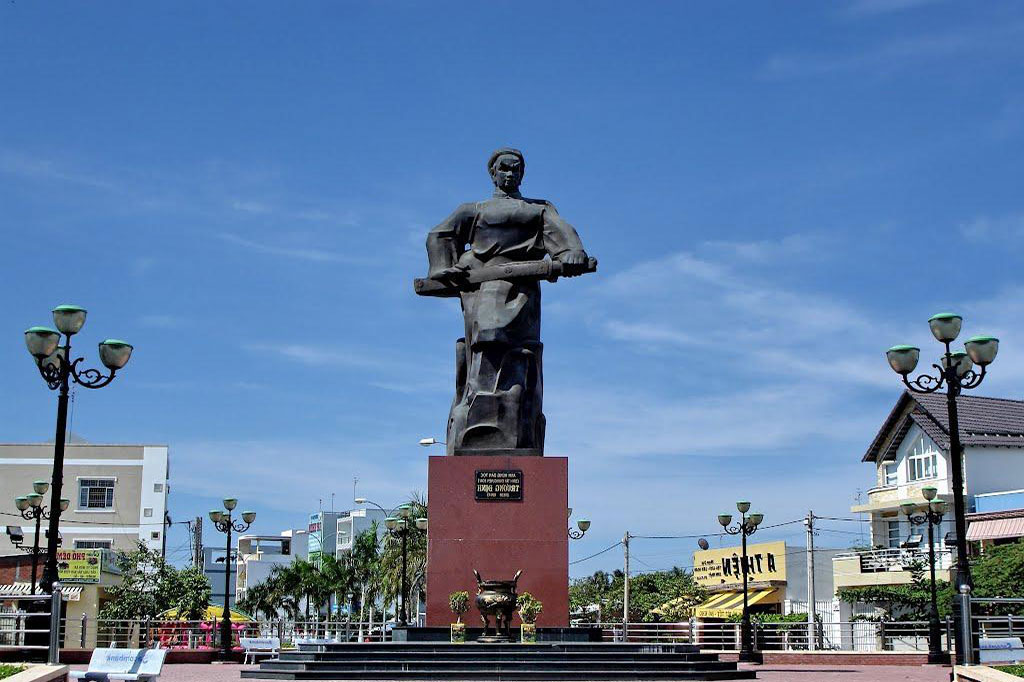
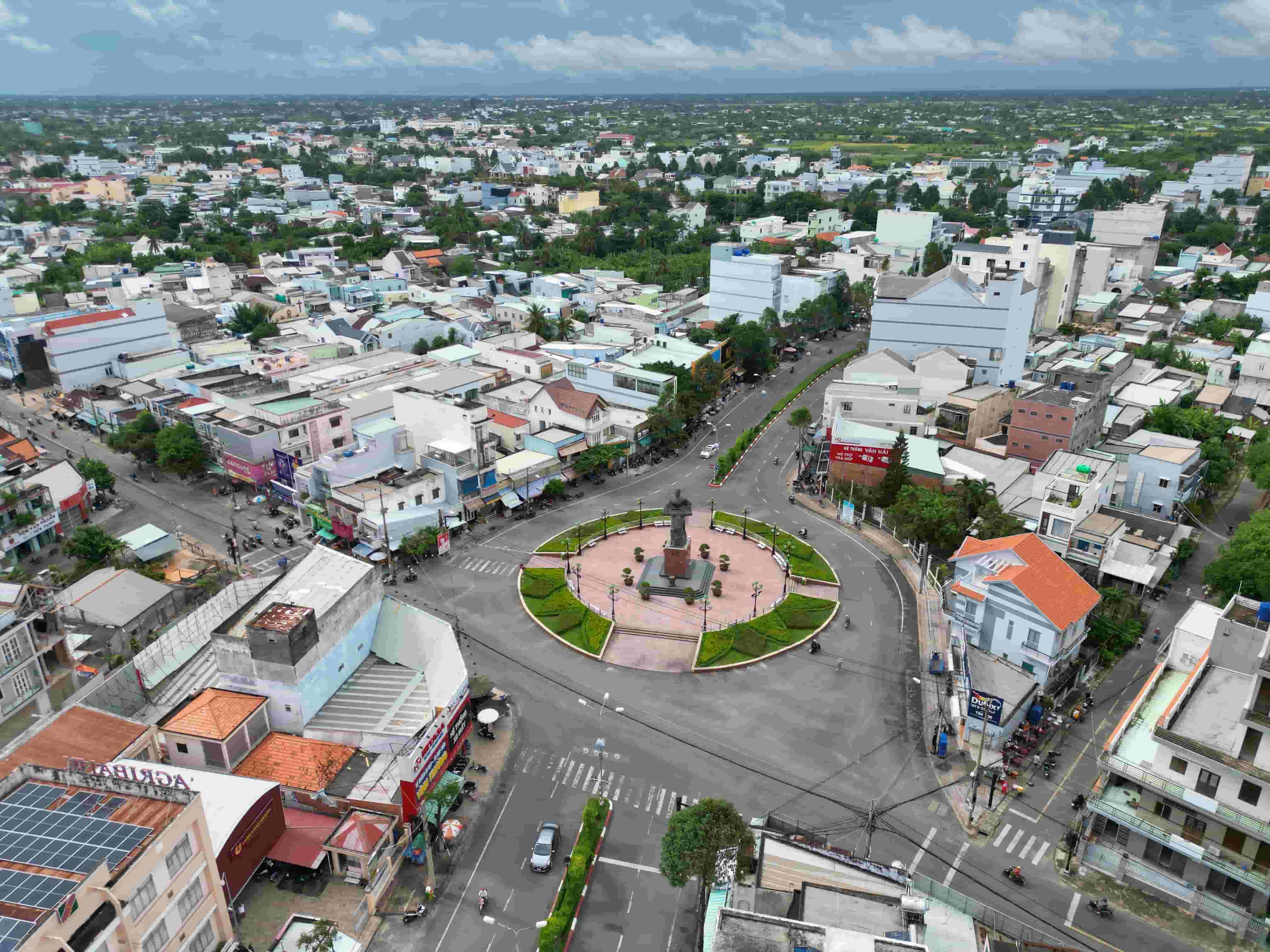
Monument to National Hero Truong Dinh
The monument to national hero Truong Dinh stands in central Go Cong.
Southern Courage

Rejecting the Imperial Order and Accepting the Title “Binh Tay Dai Nguyen Soai”

The defining moment in Truong Dinh's story came in 1862. After signing a treaty, the Hue court ordered him to leave for a new post in Phu Yen and dissolve his forces in Go Cong so the territory could be handed to France.

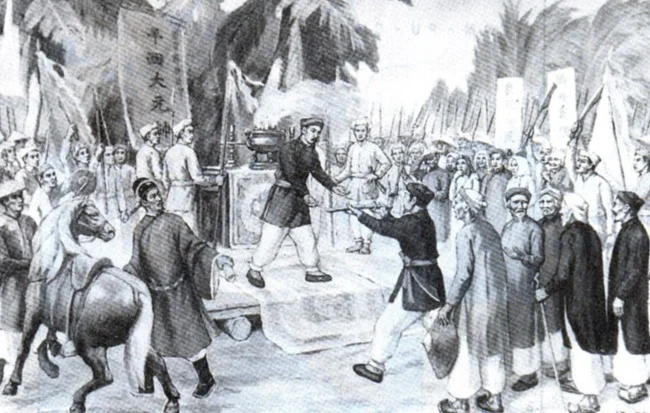
Faced with a choice between loyalty to the monarch and loyalty to the country and its people, Truong Dinh made a historic decision. He declared, “The court may fear the French, but we do not,” rejected the imperial order and broke the sword granted by the king, choosing to remain and fight beside the people.

Moved by his courage, residents and resistance fighters acclaimed him as “Binh Tay Dai Nguyen Soai”. It was a unique title in Vietnamese history—not bestowed by a king, but granted by the people through sacrifice and devotion.

Truong Dinh Acclaimed as Commander
The title “Binh Tay Dai Nguyen Soai” reflects the profound trust and love Southern Vietnamese people placed in Truong Dinh.
Portrait of the Hero

Who Was Truong Dinh? From Quang Ngai to Hero of Southern Vietnam

Truong Dinh (1820–1864) was born in Binh Son District, Quang Ngai Province. He followed his father south as a young man, bringing the resilience of Quang Ngai into the generous, open culture of Southern Vietnam.

In Go Cong, he married Tran Thi Sanh, daughter of one of the region's wealthiest landowning families. Rather than living in comfort, the couple used their property and rice stores to recruit volunteers, purchase weapons and establish military agricultural settlements for the resistance.

In August 1864, betrayal by Huynh Cong Tan allowed enemy forces to surround his base. Shot and gravely wounded in the spine, Truong Dinh drew his sword and took his own life rather than be captured. He was only 44 and had devoted his life to this land.

Birthplace Born in Quang Ngai, he built his life and made his final sacrifice in Go Cong.
Support at Home His wife, Tran Thi Sanh, provided substantial financial and material support.
Hy sinh He took his own life at Ao Dinh in Go Cong on August 20, 1864, preserving his honor rather than being captured.
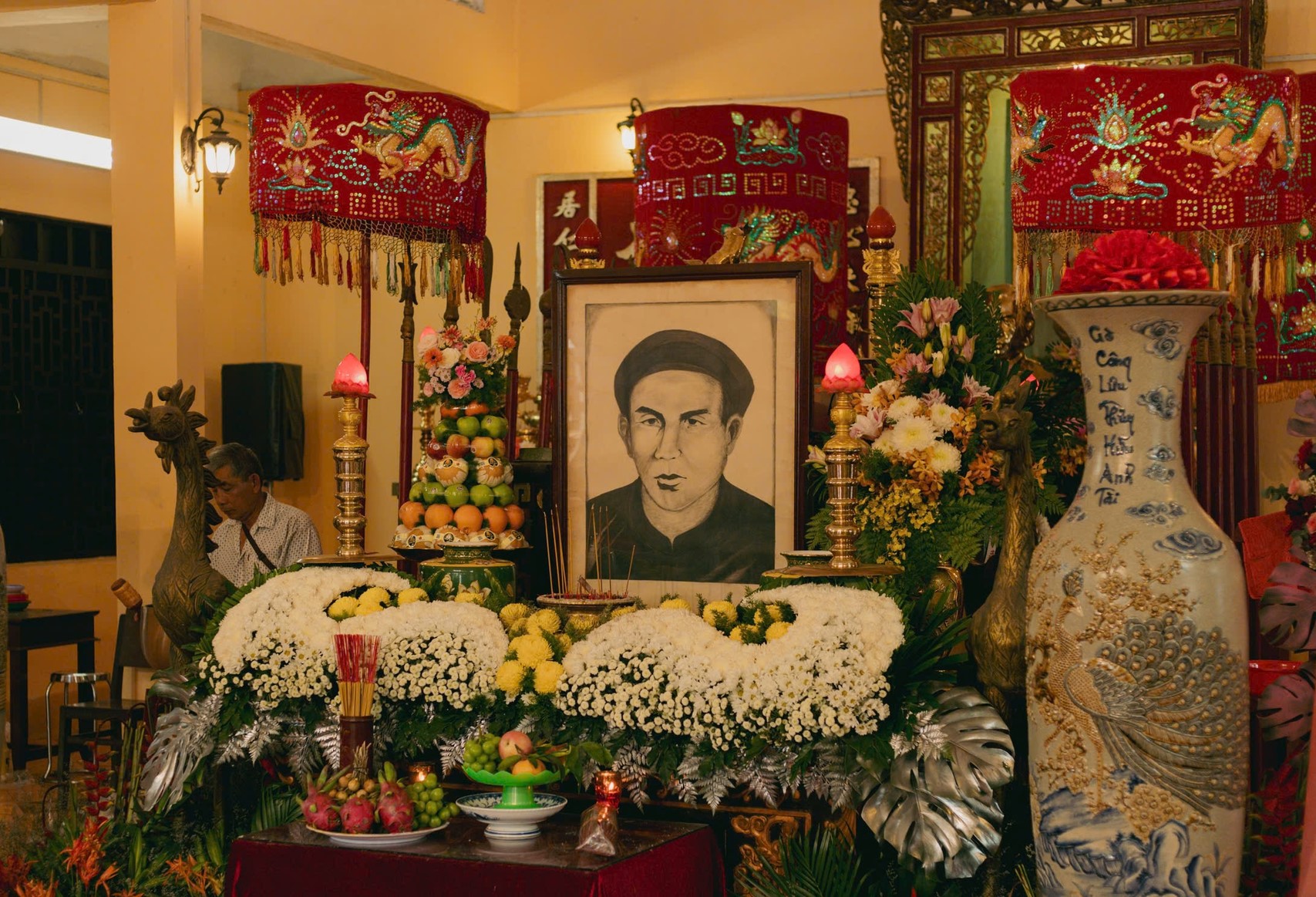
Altar of National Hero Truong Dinh
The Truong Dinh Altar Inside the Temple
A Legendary Resistance Base

The Resistance Network and the Legend of “Dam La Toi Troi”

The reason Truong Dinh's forces troubled the French for years despite limited weapons lay partly in their base at “Dam La Toi Troi”, in present-day Gia Thuan Commune, Go Cong Dong. The mangrove forest was so dense that sunlight barely reached the ground. From 1861 to 1864, Truong Dinh turned it into the strongest resistance center in Cochinchina.

In the treacherous mud and wetlands, French ships and superior weapons were of little advantage. Soldiers entering the forest became trapped and vulnerable to ambush. From this hidden headquarters, Truong Dinh wrote impassioned proclamations urging scholars and people across the six provinces of Cochinchina to rise together.

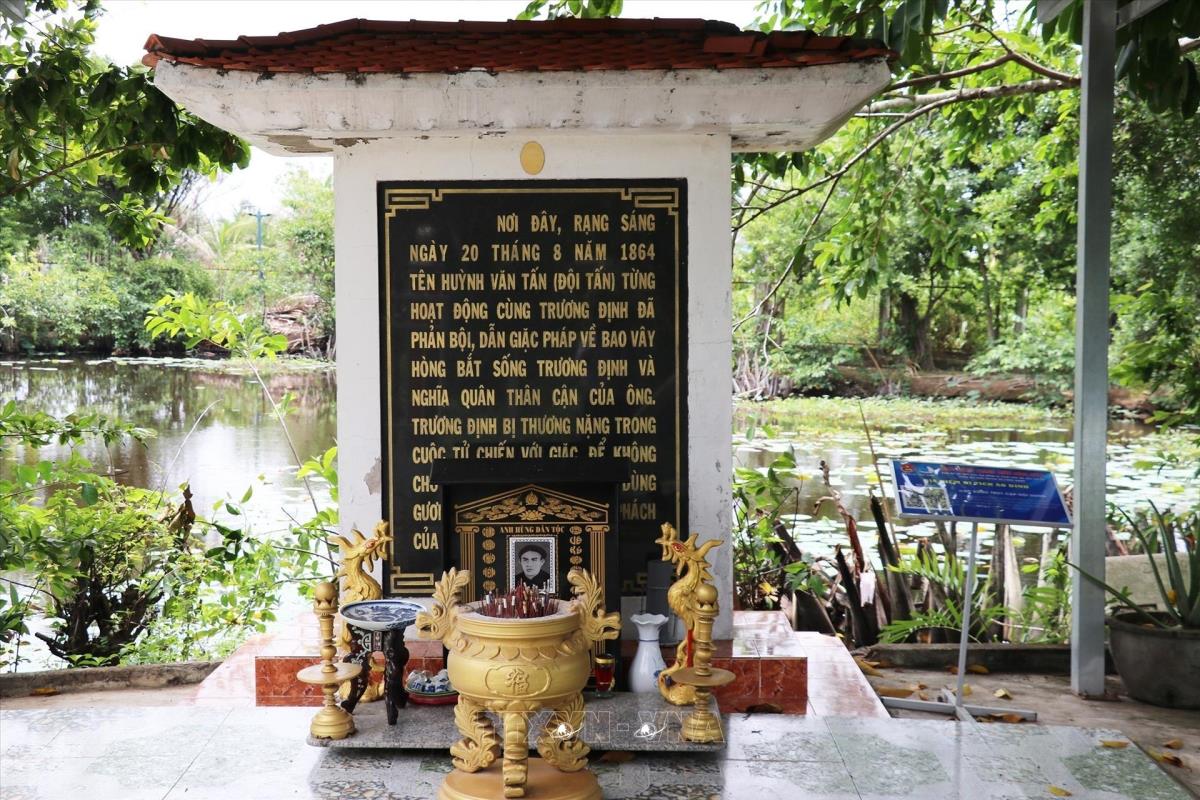
His network extended across Go Cong to Luy Phao Dai in Phu Tan, Tan Phu Dong, which guarded the Cua Tieu estuary against enemy vessels. The most tragic site is Ao Dinh in Tan Phuoc, Go Cong Dong. At dawn on August 20, 1864, betrayal by his subordinate Huynh Van Tan led to his encirclement and severe injury. Refusing capture, the commander died by his own sword and became an enduring symbol of heroic honor.

Ao Dinh Historic Site
Ao Dinh Historic Site—the Place Where National Hero Truong Dinh Died in 1864
Main Visitor Site

Truong Dinh Mausoleum—a Tomb Shaped by Devotion

Standing solemnly on Tran Hung Dao Street in Go Cong, the Truong Dinh Mausoleum carries a powerful story of marital devotion. After his death, Tran Thi Sanh defied French restrictions and quietly built her husband a substantial tomb from laterite and traditional lime mortar.

French authorities repeatedly removed the inscription “Dai Nam—Binh Tay Dai Tuong Quan” from the tombstone in an attempt to erase his memory. Each time, local residents secretly carved it back at night. The decades-long struggle to preserve a single stone inscription shows how deeply his memory survived among the people.

At the mausoleum, slow your pace, light incense and read the inscription carefully. The solemn history and steadfast character of Southern Vietnam become tangible here.

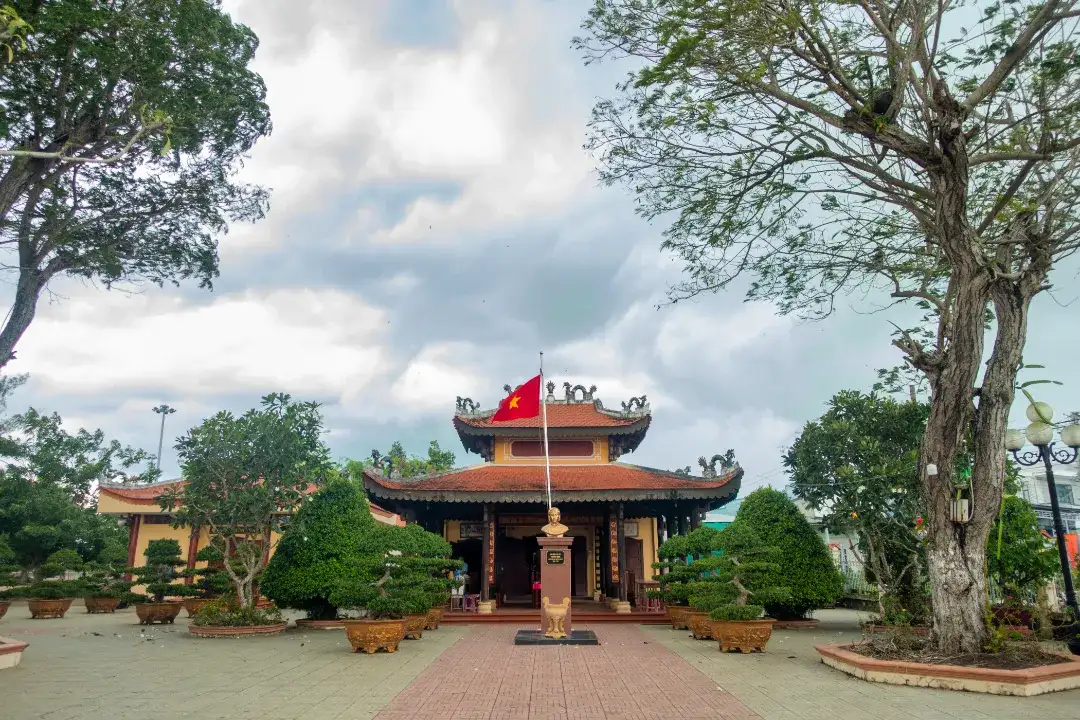
Truong Dinh Mausoleum, Go Cong
Today, ancient trees shade the solemn, peaceful mausoleum grounds in the heart of the city.
Cultural Heritage

The Temple and the August 20 Memorial Festival

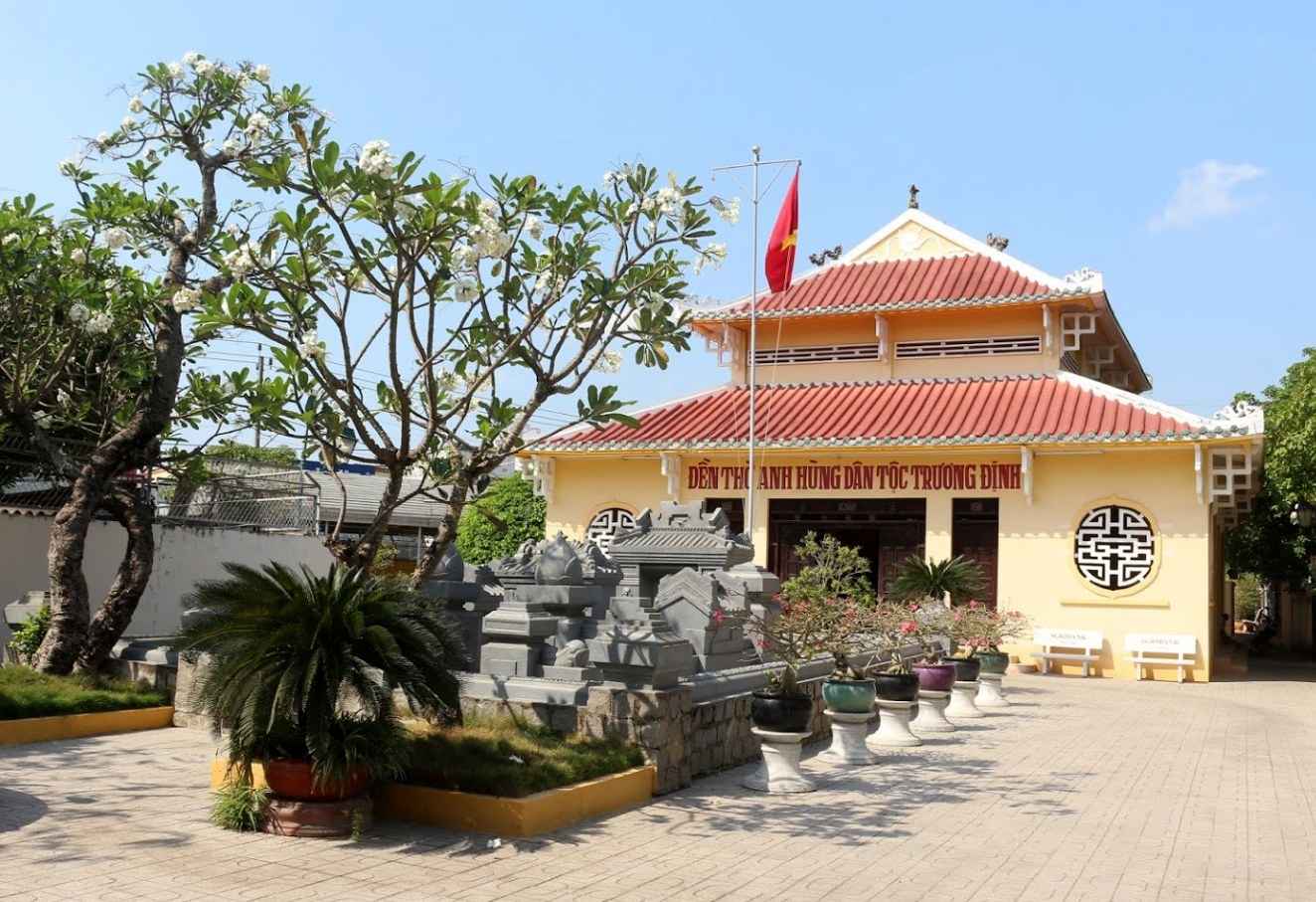
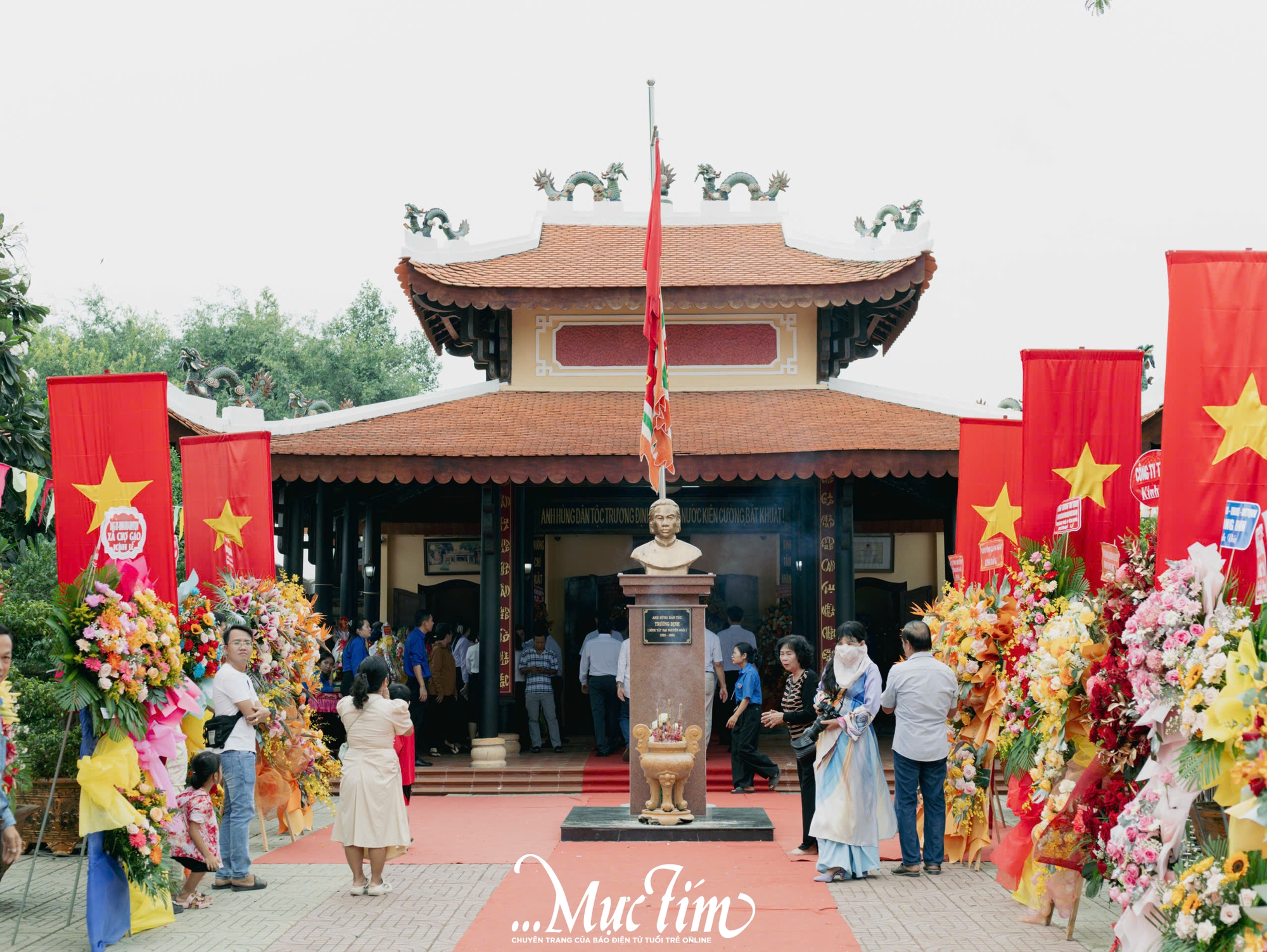
A short distance from the tomb is the Truong Dinh Temple, built in the traditional Southern style with yin-yang roof tiles and rows of valuable timber columns. Alongside his bust, the interior preserves a replica command sword and artifacts connected to the uprising.

The most important event is the annual Truong Dinh Memorial Festival on August 20. Regarded as a shared day of remembrance for the entire town, it draws thousands of people who offer incense, join the procession and bring fruit, sticky rice and meat prepared at home.

Staying in Go Cong during the festival offers a rare cultural experience: heritage is revealed not merely as moss-covered architecture, but as a living rhythm carried by the community.

Memorial Ceremony at the Truong Dinh Temple
The August 20 Memorial Ceremony at the Temple of National Hero Truong Dinh
Plan Your Visit

Suggested visiting itinerary from Go Cong Hideaway

The Truong Dinh sites are close together and only minutes from Go Cong Hideaway. It is easy to plan a morning that combines historical depth with local food.

Suggested morning route: At 8:00 a.m., cycle to the Truong Dinh Mausoleum and Temple and spend around 45 minutes visiting and offering incense. Continue to the Truong Dinh Monument in the central park for a photograph. At 9:30 a.m., head to Nha Doc Phu Hai, only 500 meters away, to explore its French-era historic architecture.

Finish with roadside iced coffee or traditional cakes from Go Cong Market, then return to the homestay to rest away from the midday heat.

Monument to National Hero Truong Dinh in Go Cong
Read Next

Plan Your Go Cong Trip Your Way

Explore more itineraries, destinations and accommodation information to make your trip from Go Cong Hideaway easier.

Stay at Go Cong Hideaway for a More Relaxed Go Cong Trip

From the homestay, central heritage sites, the market, cafes and an optional trip to Tan Thanh Beach are all easy to reach. Go Cong Hideaway offers a quiet, leafy setting where you can recharge after exploring.

View Room Types Contact Us to Book

Sources

The historical background and biography in this article were compiled from Vietnamese historical records and local heritage sources to provide accurate introductory context before your visit.

Frequently Asked Questions

Is there an admission fee for Truong Dinh attractions?

No. The mausoleum, temple and monument park are all open free of charge to residents and visitors.

What time should I visit the Truong Dinh Mausoleum?

Visit during administrative hours, from 7:00 to 11:00 a.m. or 2:00 to 5:00 p.m., when indoor displays are most likely to be open and the light is best.

Should I bring incense?

It is not necessary. The mausoleum and temple usually provide incense through the site management. You may leave a small donation if you wish.

What clothing is appropriate at the mausoleum and temple?

Wear modest, respectful clothing with sleeves and trousers or a skirt below the knee. Avoid loud conversation and joking within the sacred grounds.

How far is the Truong Dinh Mausoleum from Go Cong Hideaway?

Very close. The mausoleum and temple in central Go Cong are only five to seven minutes from the homestay by bicycle or motorbike.